EU governments miss FP10 deadline, but Cypriot Presidency still targets June deal amid research community calls for closer engagement with the Parliament
Share this page
by Rosita Zilli, Policy Director, and Marianne Lazarovici, Policy Officer
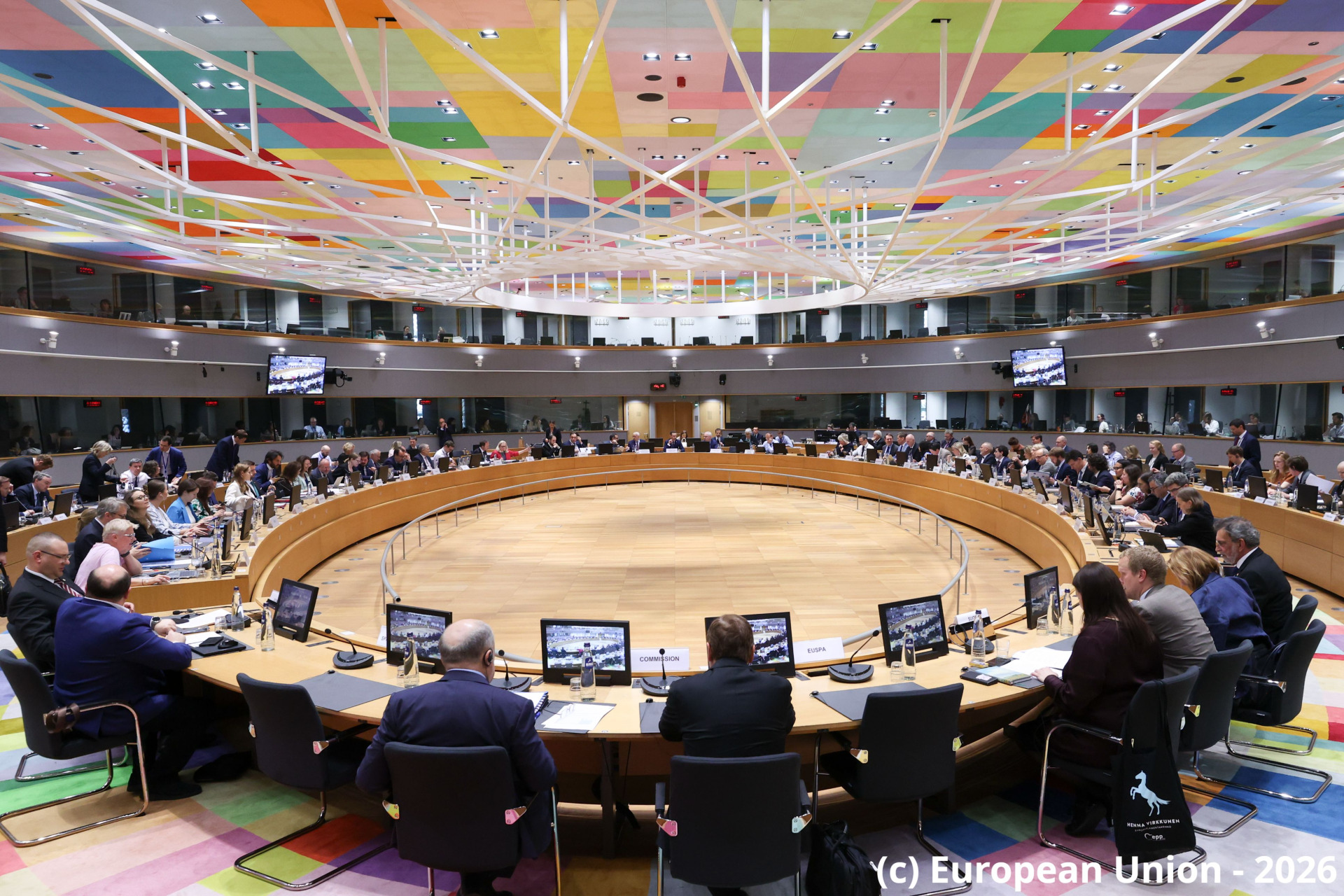
In the context of the ongoing negotiations on the next Framework Programme for research and innovation (FP10), EU governments missed their target to reach a partial agreement on the European Commission’s proposal during the Competitiveness Council meeting on 29 May. This would have settled a position on the structure of FP10, leaving out other elements that depend on broader negotiations over the next EU budget. Meanwhile, work on FP10 is proceeding in the European Parliament, with the research committee set to go through amendments to its draft report on the file by September. This comes against the backdrop of ongoing discussions on the EU budget for 2028-34, with the Parliament having suggested that progress in negotiations with the Council on FP10 could depend on the prior attainment of an agreement on the budget’s amount.
Due to insufficient progress being made in negotiations ahead of the Competitiveness Council on 29 May, the Cypriot presidency of the Council issued a steering note underlining four key unresolved issues: strategic priority setting, including the alignment between FP10 and the European Competitiveness Fund (ECF); partnerships; the Widening programme; and bottom-up collaborative research and innovation. Cyprus is still hoping to achieve a partial agreement among EU governments before it cedes the presidency of the Council to Ireland at the end of June, with Cyprus’s deputy minister for research and innovation Nicodemos Damianou warning that delays could risk creating uncertainty for researchers, innovators and industry. Meanwhile, the ECF is being handled by the General Affairs Council, which is expected to discuss its position on 16 June 2026.
The European Parliament’s lead negotiators have already published their draft reports on FP10 and the ECF, which still need to be amended and adopted. The Parliament’s research committee (ITRE) will meet on 3 June, 24-25 June, 13-14 July and 1 September to sort through the thousands of amendments to the reports. The ITRE Committee then plans to officially adopt these on September 10. Adoption in plenary should follow on 5 October, which means that negotiations with the Council – known as trilogues – could begin in the middle of the month.
The research community has expressed concern over the two European institutions appearing to be shaping their positions in isolation, which could set the stage for drawn-out trilogue negotiations. The research sector is thus calling on EU governments to build on the Parliament’s momentum and engage with its proposals when drafting their own position, so that a compromise can more easily be found later this year.
The talks are further complicated by the parallel discussions concerning the overall EU budget – the Multiannual Financial Framework (MFF) - for 2028-34. The Parliament has suggested that it will not begin negotiations with the Council on sectoral programmes such as FP10 until there is an agreement on the size of the EU budget. Heads of government meet in Brussels on 18 and 19 June to discuss the EU’s long-term budget, after which the Cypriot presidency aims to have a “well-thought-out negotiating box” ready. This will be picked up in the Irish presidency in the second half of the year. It is this financial negotiation that will determine what is possible in the next Horizon Europe, with both the Commission proposal and Parliament’s initial response asking for more money than governments seem willing to pay.
Meanwhile, at the 29 May Competitiveness Council, EU ministers adopted a new EU framework for science diplomacy, which aims to strengthen the Union’s position as a global leader in science and technology, and to use scientific cooperation to advance its foreign policy objectives. The recommendation stresses that science is a global public good and that scientific collaboration can build trust and facilitate dialogue with third countries. It emphasises the importance of an open and secure international cooperation in research and innovation, building on the association of third countries to Horizon Europe and other initiatives, such as “Choose Europe for Science”.
Against this backdrop, EERA will continue monitoring the developments surrounding FP10, the ECF and the MFF and will keep advocating for a swift clean energy transition, as well as for the recognition of the role of research and innovation in accomplishing it.
Login as an EERA member
In case you are an EERA member and don’t have login details, please contact secretariat@eera-set.eu
Join EERA
You are not an EERA member yet? Then you are missing out on a lot!
EERA gathers the best energy researchers and infrastructures in the whole of Europe
EERA makes your voice heard in the political discussions at the European level
EERA offers great networking opportunities with peers from your discipline - and others