European Council leaves MFF deadlock unresolved, keeping the future of FP10 funding in the balance
Share this page
By Rosita Zilli, Policy Director, and Clara Vullo, Policy Officer
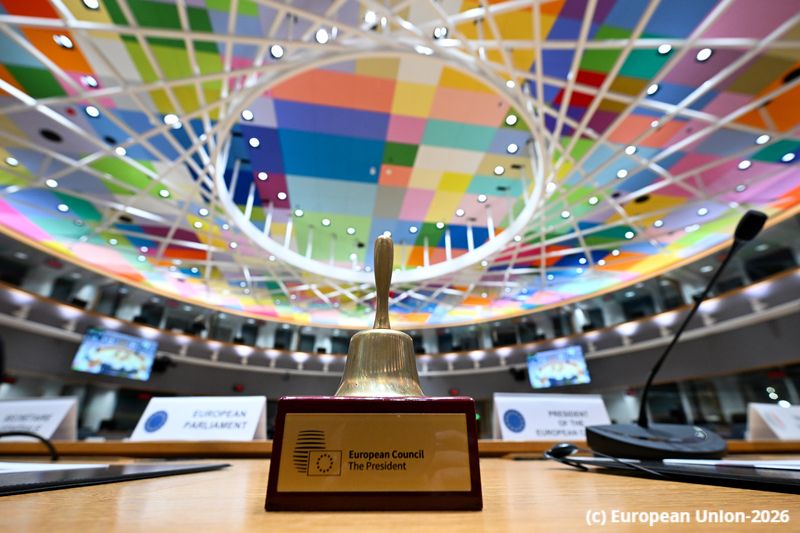
The European Council of 15-16 October discussed the key elements of a balanced compromise on the 2028-2034 Multiannual Financial Framework (MFF), based on the updated negotiating box presented by the Irish Presidency, but did not deliver the breakthrough many had hoped for. Leaders invited Council President António Costa to take the negotiations forward and stressed that an agreement before the end of 2026 would allow the legislative acts to be adopted in 2027, ensuring funding reaches beneficiaries without interruption from January 2028.
Behind this procedural language, positions remain entrenched. Member States remain split into two camps: the “frugal” net contributors, led by Germany, which want a smaller EU budget, and the “Friends of Cohesion”, a group of 17 countries that want a larger budget with funding protected for cohesion and agriculture. Despite hours of talks, neither side moved meaningfully towards the other. The Irish negotiating box is now considered politically dead. Costa is expected to present a new compromise in the coming weeks, possibly ahead of a special summit on 26 November, with a focus on restoring flexibility instruments, reworking the package of EU-wide taxes and keeping national contributions low.
The negotiating box tabled on 10 October proposed cutting around 8% from the Commission’s nearly €2 trillion proposal, or €159 billion in current prices. The cuts fall overwhelmingly on EU-wide priorities such as competitiveness, defence and foreign aid, while agriculture and regional payments were spared. The next Horizon Europe programme (FP10) would lose 9.6% (€16.8 billion), the European Competitiveness Fund 11% and Euratom 10.6%. FP10 would be left with €158 billion, €17 billion less than the Commission’s proposal and €42 billion below the Parliament’s preferred €200 billion. The Commission also warned that the cuts to flexibility instruments, the “rainy-day funds” designed to help Member States respond to unforeseen events such as natural disasters or public health emergencies, would make the next budget more rigid than the current one and leave the EU with fewer means when crises hit.
Reactions were swift and largely united. The leaders of the EPP, S&D, Renew Europe and Greens/EFA stated that the proposal cannot be a basis for Parliament’s consent, which requires an absolute majority of MEPs. Horizon Europe rapporteurs Christian Ehler and René Repasi warned that cutting research “will cost votes”, while Parliament’s lead MFF negotiators criticised the lack of progress on new own resources. President Metsola presented new own resources to leaders as “a bridge to agreement”. Research Commissioner Ekaterina Zaharieva called cuts to R&I “a strategic mistake”. The research community has also voiced strong opposition. The Heitor expert group, which previously advised the Commission on FP10 and recommended a €220 billion budget, told EU leaders that the proposal moves in the “totally wrong direction”.Research lobby groups are now preparing to take their case directly to national governments, including through letters and public campaigns, since the key political decisions on the EU budget are taken in the capitals.
For the clean energy R&I community, the stakes are considerable. FP10 and the Competitiveness Fund are precisely the programmes the Commission fears will bear the brunt of further cuts. The timing is striking. In her address to the European Parliament on 6 October, Commission President von der Leyen reaffirmed that the clean energy transition is central to reducing Europe’s dependence on imported fossil fuels, while identifying R&I among the strategic areas requiring greater investment in the 2028-2034 MFF, warning against substantial cuts to the Commission’s proposal. Cutting FP10 would sit uneasily with this position. Two risks deserve attention for FP10 in the coming weeks. The first is a further squeeze on its budget in later negotiating rounds, beyond the €158 billion foreseen by the Irish Presidency, which is already €17 billion below the Commission’s proposal. The second is that FP10 funding could be made conditional on new own resources, whose adoption remains uncertain.
EERA will continue to closely follow developments concerning the Multiannual Financial Framework, assess their implications for FP10 and actively engage with relevant stakeholders to advocate for an ambitious European research and innovation budget. Beyond the budgetary dimension, EERA is also further developing its positions on the outstanding FP10 policy issues of particular relevance to the energy R&I community. An important milestone in this work was reached on 16 October 2026, with the submission of EERA’s contribution to the European Commission’s public consultation on the future European Partnership landscape under Horizon Europe 2028–2034, calling for a Partnership portfolio that recognises the strategic role of energy R&I, builds on existing European cooperation frameworks and reflects the diversity and needs of the community. This marks another step in EERA’s sustained engagement to help shape the EU’s next research and innovation framework, with further contributions to follow.
Login as an EERA member
In case you are an EERA member and don’t have login details, please contact secretariat@eera-set.eu
Join EERA
You are not an EERA member yet? Then you are missing out on a lot!
EERA gathers the best energy researchers and infrastructures in the whole of Europe
EERA makes your voice heard in the political discussions at the European level
EERA offers great networking opportunities with peers from your discipline - and others